You notice the missing shingle after a storm. A damp spot on the ceiling gets your attention. But what about the problem you can’t see? The one that works in silence, behind the walls, with no drama at all? That’s the real danger. Poor roof ventilation isn’t just a technical flaw. It’s a silent agreement for decay. It invites mold to move in and slowly take apart the home you’ve built, from the inside out.
This isn’t about a musty attic smell. It’s about structural rot, compromised air quality, and a threat to your family’s health. It’s about the value of your property leaking away, quite literally, into thin air. We’ll walk through exactly how this happens, the specific warning signs most homeowners miss, and what you can actually do to stop it. This is the quiet problem you need to make some noise about.
The Stealthy Mechanics of a Failing Roof System
Think of your roof as a living, breathing part of your home. It has to be. In Roofing Halifax, our weather swings from humid summers to deep-freeze winters. Your attic space needs to manage massive shifts in temperature and moisture.
Proper ventilation creates a constant, gentle flow of air. Intake vents under the eaves pull in cooler air. Exhaust vents at the peak let hot, moist air escape. It’s a simple, beautiful system when it works.
When it fails, that moist air from daily living, showers, cooking, and even breathing gets trapped. It rises into the attic and has nowhere to go. In winter, that warm moisture hits the cold underside of the roof deck. It condenses. Water droplets form on the nails, the wood, and the insulation. Every single night. This isn’t a leak. It’s sweet. And it never stops.
How Mold Claims Its Territory
Mold spores are everywhere, floating around waiting for the right conditions. A dark, stagnant, damp attic with organic material (like wood sheathing) is not just the right condition. It’s a five-star resort.
The process is slow, inevitable, and destructive:
- Foundation: Condensation soaks into the wooden roof deck and rafters. The wood is always damp.
- Colonization: Mold spores land and begin to feed on the wood. They spread through microscopic threads.
- Damage: The mold digests the wood to survive. This weakens the roof structure from the inside. The wood becomes soft, loses its integrity. You might not see it until you push a screwdriver through a roof board that should be solid.
- Infestation: It spreads to insulation, which then collapses and loses its R-value. It stains ceilings. The musty odor seeps into living spaces below.
The scary part? All of this can happen without a single water stain on your ceiling. The damage is hidden until it’s advanced.
The Real-World Costs You Can’t Ignore
The consequences move far beyond a repair bill. They layer on top of each other.
First, your energy bills creep up. Compressed, wet insulation doesn’t work. Your furnace and AC fight harder to keep up, wasting money every month.
Then, consider your health. That moldy air in the attic finds ways into your home’s air system. For people with allergies or asthma, it can trigger serious reactions. Chronic coughs, headaches, and fatigue are sometimes traced right back to poor indoor air quality from an unseen source.
Finally, the structural threat. Weakened roof boards can’t handle a heavy snow load. The entire roofing system is compromised. When you finally go to sell your home, a proper inspection will reveal this. The negotiation power flips to the buyer, and the value you’ve lost becomes painfully clear.
Signs Your Roof is Gasping for Air
You don’t need to be a roofer to spot the clues. Look for these:
- Ice dams in winter. This is a classic Halifax giveaway. Heat trapped in the attic melts snow from underneath. The water runs to the cold eaves and refreezes, creating a dam that backs water up under your shingles.
- Rust on nail heads inside the attic. Metal shouldn’t rust in a dry space.
- A noticeable, musty odor when you go into the attic.
- Warped or damp roof decking. The plywood or boards should be dry and consistent.
- Premature aging of shingles. Excess heat in the attic bakes shingles from behind, causing them to curl, crack, and fail years early.
The Fix is Simpler Than the Problem
The good news here is profound. Correcting ventilation is often a straightforward, cost-effective repair. It’s not about rebuilding the roof. It’s about rebalancing the system.
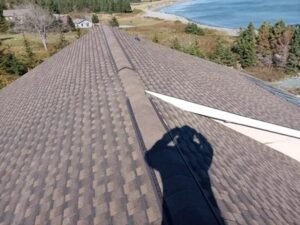
A professional will assess your specific roof. They’ll calculate the needed intake and exhaust based on your attic’s square footage. The solution might involve installing new soffit vents, adding a ridge vent along the peak, or upgrading to powered fans. The goal is to create that smooth, passive airflow that keeps everything dry.
Ignoring it, though, means every other investment in your roof, new shingles, better insulation, is fundamentally at risk. You’re building on a damp foundation.
Your Roof’s Health Starts in the Attic
A well-ventilated roof is a durable, efficient, and healthy roof. It protects your biggest investment on every level. The hidden consequence of poor ventilation isn’t really hidden. It leaves a trail of clues. Your job is to look for them.
Has it been more than two years since you’ve had someone look in your attic? Not just at your shingles, but at the environment underneath them? That glance could be what stops a quiet problem from becoming a loud, expensive crisis.
If you’re in the HRM and wondering about the health of your roof system, a conversation costs nothing. Central Roofing provides detailed assessments that look at the whole picture, not just the surface. Because a roof that lasts is a roof that can breathe, let’s make sure yours can.